 |
 |
|
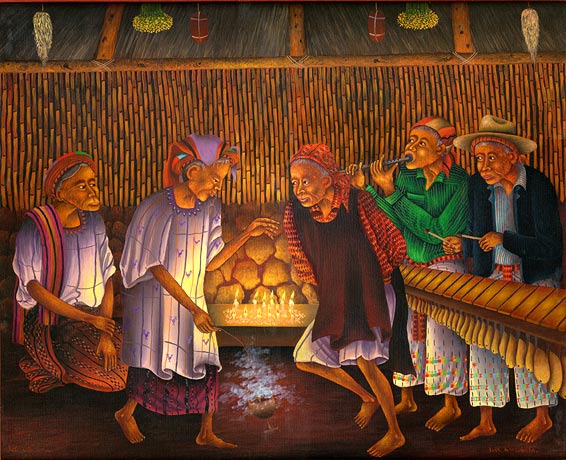
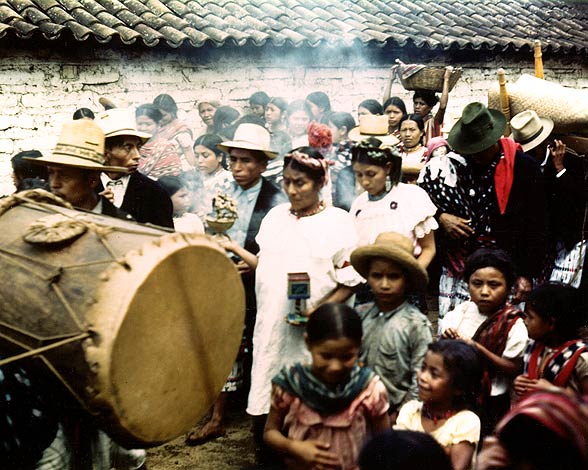
Life
in a Guatemalan Indian Village, by Benjamin D. Paul, describes the customs of the Maya
of San Pedro la Laguna. Although
many things have changed since the article was written in 1950, it still
provides a deep and very human understanding of the people of this
Tz'utuhil Maya town. |
 La
vida de un pueblo indigena de Guatemala, por Benjamin D. Paul,
describe las costumbres de los mayas de San Pedro la Laguna. Aunque muchas
cosas han cambiado desde el artículo fue escrito en 1950, aún ofrece una
profunda y muy humana la comprensión de la población de esta pueblo maya
tz'utujil. La
vida de un pueblo indigena de Guatemala, por Benjamin D. Paul,
describe las costumbres de los mayas de San Pedro la Laguna. Aunque muchas
cosas han cambiado desde el artículo fue escrito en 1950, aún ofrece una
profunda y muy humana la comprensión de la población de esta pueblo maya
tz'utujil. |
| |
 |
|
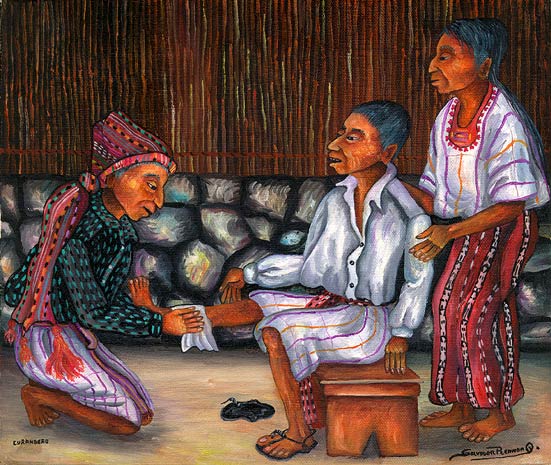
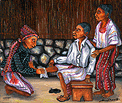 Benjamin D. Paul writes about the curanderos of San Pedro la
Laguna who were famous throughout Guatemala. Benjamin Paul, an anthropologist emeritus
from Stanford University, has been writing about the customs of San Pedro since he first
visited there in 1940. Benjamin D. Paul writes about the curanderos of San Pedro la
Laguna who were famous throughout Guatemala. Benjamin Paul, an anthropologist emeritus
from Stanford University, has been writing about the customs of San Pedro since he first
visited there in 1940. |
Benjamin D. Paul escribe
acerca de los curanderos de San Pedro la Laguna quienes eran famosos en
toda Guatemala. Benjamin Paul, un antropólogo emérito de la Universidad
de Standford, ha estado escribiendo sobre las costumbres de San Pedro
desde su primera visita al lugar, en 1,940. |
| |
|

|
 |
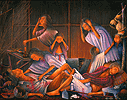
| Benjamin Paul and William Demarest's article about how the
death
squads operated in San Pedro between 1980 and 1985, the period of the worst violence
in Guatemala. |
 Artículo
escrito por Benjamin Paul y William Demarest acerca de como los
escuadrones de la muerte operaban en San Pedro entre 1,980 y 1,985, el
período de mayor violencia en Guatemala. Artículo
escrito por Benjamin Paul y William Demarest acerca de como los
escuadrones de la muerte operaban en San Pedro entre 1,980 y 1,985, el
período de mayor violencia en Guatemala. |
| |

(Lo siento, todavia no hay traducción en Espanol.) |
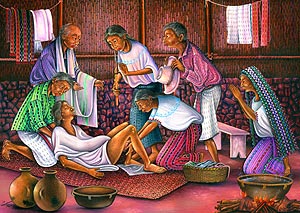 |
| Lois Paul's 1978 article about
midwives in
San Pedro la Laguna. One of the midwives in this article, Juana, is the
subject of Barbara Rogoff's award winning 2011 book
Developing Destinies:
A Mayan Midwife and Town |
| |
 |
 |
| This article about
sibling rivalry, written by Benjamin Paul in 1950, captures many aspects of life in
San Pedro la Laguna. At that time San Pedro was a small isolated village.
Many beliefs and customs have changed or disappeared since then. |
Este artículo sobre la
rivalidad entre hermanos, escrito por
Benjamin Paul en
1950, capta muchos aspectos de la vida en San Pedro la Laguna. En esa
época, San Pedro era un pueblo pequeño y aislado. Muchas de las creencias
y costumbres han cambiado o han desaparecido desde esa época. |
| |
 |
    |
| In this article we explain the basics about how the
Maya Calendar works. The Tz'olkin
(ceremonial calendar) and the Haab (solar calendar) as well as the Maya
glyphs and numerals are explained. |
En este artículo describimos los conceptos básicos acerca de cómo
funciona el Calendario Maya. El Tz'olkin (calendario ceremonial) y el
Haab (calendario solar) así como los glifos mayas y los números mayas se
explican. |
| 2012 and the
Maya Calendar: an article about how the Long Count works, and the
meaning to the Maya of the end of the current B’aqtun on December
21, 2012. |
El Calendario Maya y 2012: un articulo sobre
como trabaja la Cuenta Larga, y el significado a los mayas del fin del B’aqtun
en el 12 de diciembre, 2012. |
| |
 |
 |
| Edgar's Story is the
first installment of the history of his family
and his life. Edgar was born in a small Guatemala town, San Antonio
Aguascalientes. |
Margot Blum Schevill, an
anthropologist who has written and edited books on Maya weaving,
learned to weave from Edgar's mother. This is the first installment of her
journal of that experience. |
| |
|
|
|
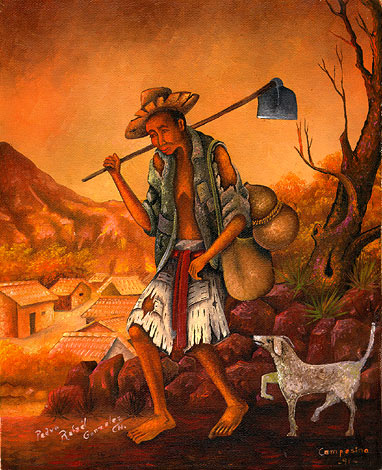
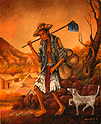 Inspired by his Grandfather and namesake, Pedro
Rafael Gonzalez Ch. begins painting and develops what will become the San Pedro style
of painting. Inspired by his Grandfather and namesake, Pedro
Rafael Gonzalez Ch. begins painting and develops what will become the San Pedro style
of painting. |
Inspirado
por su abuelo y tocayo, Pedro
Rafael González Chavajay empieza a pintar y desarrolla lo que se
convertirá en el estilo de pintar de San Pedro. |
| |
 |
|
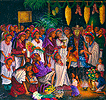 Mario,
one of Pedro Rafael Gonzalez Chavajay's younger brothers, got off to a
slow start, but after years of hard work and perseverance, became one of
the very best Tz'utuhil Maya artists. Mario,
one of Pedro Rafael Gonzalez Chavajay's younger brothers, got off to a
slow start, but after years of hard work and perseverance, became one of
the very best Tz'utuhil Maya artists. |
|
| |
|
|
|
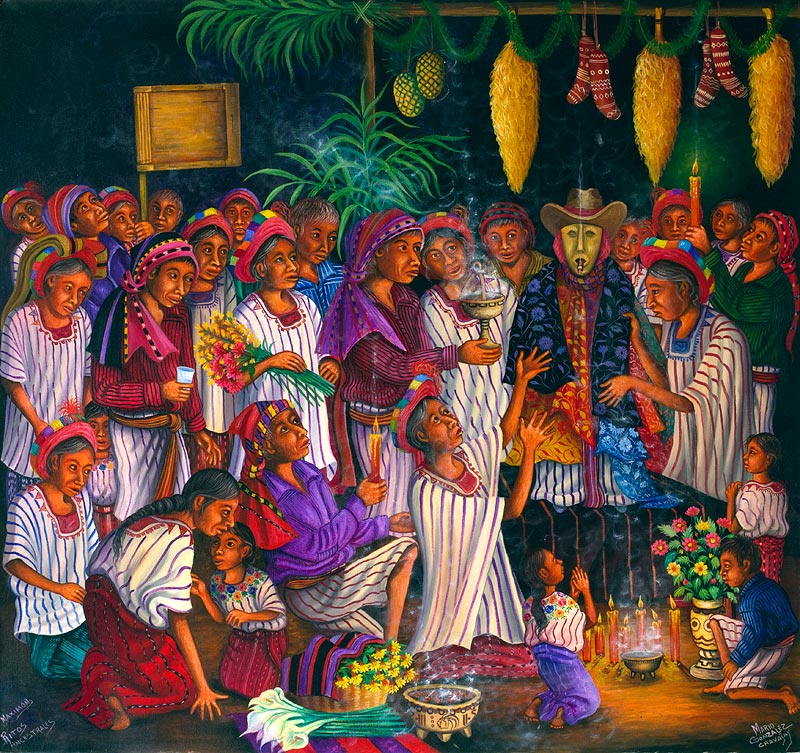
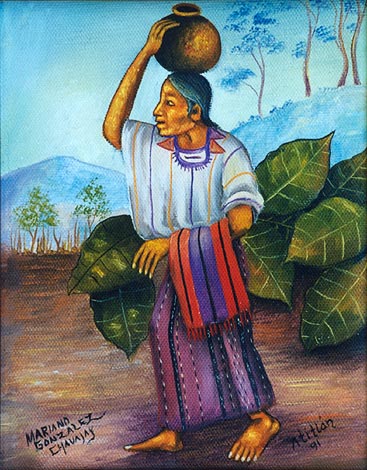
| Shortly after Pedro Rafael starts painting in oils, his cousin Mariano
González Chavajay also begins. Mariano is soon teaching his brother Matias his skills. |
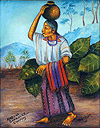 Poco
después que Pedro Rafael empieza a pintar óleos, su primo Mariano
González Chavajay también empieza. Poco después, Mariano empieza a enseñarle a su hermano
sus dotes. Poco
después que Pedro Rafael empieza a pintar óleos, su primo Mariano
González Chavajay también empieza. Poco después, Mariano empieza a enseñarle a su hermano
sus dotes. |
| |
|

|
|
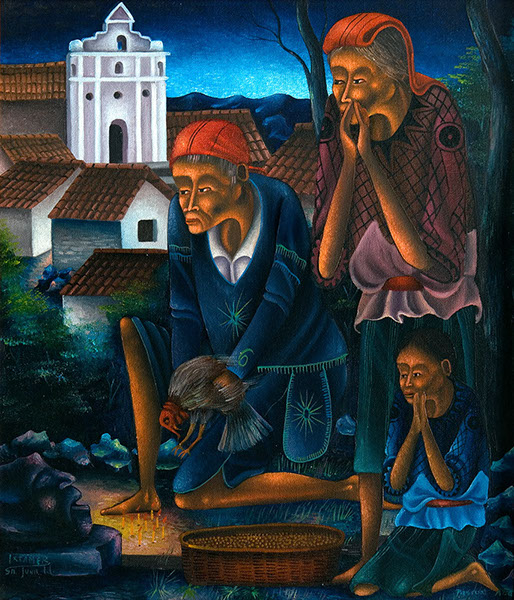
 The second person to take up oil painting in San Juan la Laguna, Antonio
Ixtamer has trouble earning a living and almost gives it up. When he begins working
with Vicente Cumes Pop he blossoms as an artist. The second person to take up oil painting in San Juan la Laguna, Antonio
Ixtamer has trouble earning a living and almost gives it up. When he begins working
with Vicente Cumes Pop he blossoms as an artist. |
Antonio
Ixtamer, la segunda persona que empezó a pintar óleos en San Juan la
Laguna tuvo problemas para ganarse la vida y casi lo deja. Cuando empieza
a trabajar con Vicente Cumes Pop, alcanzó su plenitud como artista. |
| |
|
|
|
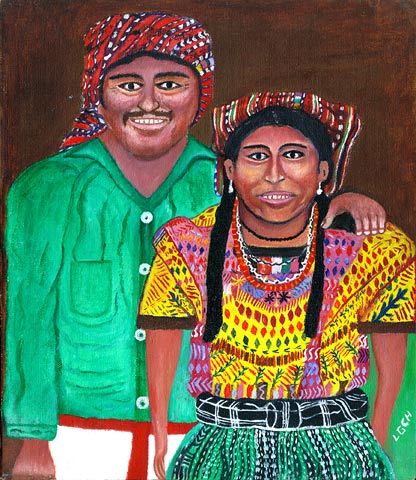
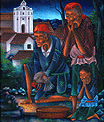
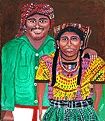
| After retiring Lorenzo Gonzalez Chavajay takes up painting,
developing his own style to become the only truly "naive" painter in the area. |
 Después
de retirarse, Lorenzo González Chavajay empieza a pintar, desarrollando
su propio estilo para convertirse en el único pintor verdaderamente
cándido del área. Después
de retirarse, Lorenzo González Chavajay empieza a pintar, desarrollando
su propio estilo para convertirse en el único pintor verdaderamente
cándido del área. |
| |
|
|
|
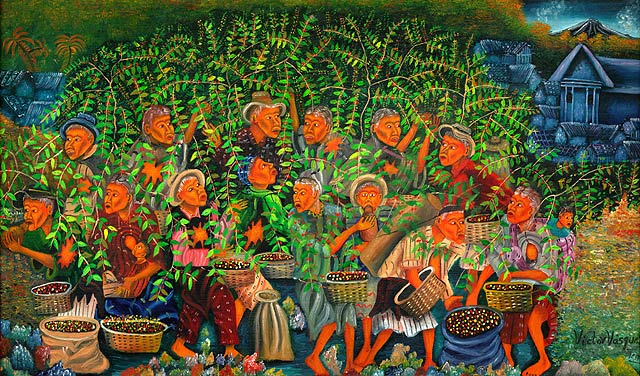
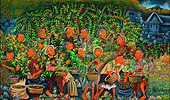 Inspired by the artists in San Pedro and San Juan, Victor Vasquez
Temó takes up painting and discovers that he has a
truly
unique talent. Inspired by the artists in San Pedro and San Juan, Victor Vasquez
Temó takes up painting and discovers that he has a
truly
unique talent. |
Inspirado
por los artistas de San Pedro y San Juan, Víctor Vásquez
Temó empieza a
pintar y descubre que tiene un talento verdaderamente único. |