 |
|||||||||||||
 |
|||||||||||||
|
. |
|||||||||||||
|
 |
||||||||||||
| . | |||||||||||||
| . |
|
||||||||||||
|
|
|||||||||||||
| . |
 |
||||||||||||
| . | |||||||||||||
 Pedro
Rafael González Chavajay, Rafael's grandson, took up painting and
became San Pedro la Laguna's second painter. Over time his painting
developed a distinctive style and he was instrumental in defining the
Tz'utuhil style of painting. Along with his cousin Mariano Gonzalez, Pedro
Rafael is considered San Pedro's finest artist. In Guatemala he has the
reputation as the best among the many autodidactic Mayan painters. Pedro
Rafael has worked exclusively with Arte Maya Tz'utuhil since 1992. His
paintings were shown with the blockbuster exhibition "Courtly
Art of the Ancient Maya," and are in the permanent collection of the
Smithsonian National Museum of the American Indian. Pedro
Rafael González Chavajay, Rafael's grandson, took up painting and
became San Pedro la Laguna's second painter. Over time his painting
developed a distinctive style and he was instrumental in defining the
Tz'utuhil style of painting. Along with his cousin Mariano Gonzalez, Pedro
Rafael is considered San Pedro's finest artist. In Guatemala he has the
reputation as the best among the many autodidactic Mayan painters. Pedro
Rafael has worked exclusively with Arte Maya Tz'utuhil since 1992. His
paintings were shown with the blockbuster exhibition "Courtly
Art of the Ancient Maya," and are in the permanent collection of the
Smithsonian National Museum of the American Indian. |
|||||||||||||
| . | |||||||||||||
 Paula
Nicho Cumez is unquestionably the most important woman artist
among the self taught Maya painters of Guatemala. She is a
Kaqchikel Maya Indian from San Juan Comalapa, the other area
with a concentration of Maya artists painting in a style that
comes out of their own Maya culture. Paula
Nicho Cumez is unquestionably the most important woman artist
among the self taught Maya painters of Guatemala. She is a
Kaqchikel Maya Indian from San Juan Comalapa, the other area
with a concentration of Maya artists painting in a style that
comes out of their own Maya culture. |
|||||||||||||
| . | |||||||||||||
 Mario
Gonzalez Chavajay has been painting for nearly twenty years. He is one
of two younger brothers of Pedro Rafael Gonzalez Chavajay who are
painters. Mario perfected his technique painting for the local galleries catering to
tourists. Four years ago he decided he wanted to paint original themes
and now works exclusively for Arte Maya Tz'utuhil. His paintings are
being shown with the blockbuster exhibition "Courtly Art of the Ancient
Maya," and are in the permanent collection of the Smithsonian National
Museum of the American Indian. Mario
Gonzalez Chavajay has been painting for nearly twenty years. He is one
of two younger brothers of Pedro Rafael Gonzalez Chavajay who are
painters. Mario perfected his technique painting for the local galleries catering to
tourists. Four years ago he decided he wanted to paint original themes
and now works exclusively for Arte Maya Tz'utuhil. His paintings are
being shown with the blockbuster exhibition "Courtly Art of the Ancient
Maya," and are in the permanent collection of the Smithsonian National
Museum of the American Indian.
|
|||||||||||||
| . | |||||||||||||
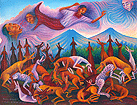 Diego
Isaias Hernandez started out working in colored pencils on paper. He
graduated to sculpture but finally ended up becoming an oil
painter. Wisely he decided to learn on his own with the result
that he has developed an original style which still is uniquely
Mayan. Among all of the Mayan painters he comes up with some of
the most interesting titles for his paintings. He won first
prize in Guatemala's most prestigious art competition for a
painting entitled "Mitch" about the hurricane which passed
through Central America cause much destruction and loss of life. Diego
Isaias Hernandez started out working in colored pencils on paper. He
graduated to sculpture but finally ended up becoming an oil
painter. Wisely he decided to learn on his own with the result
that he has developed an original style which still is uniquely
Mayan. Among all of the Mayan painters he comes up with some of
the most interesting titles for his paintings. He won first
prize in Guatemala's most prestigious art competition for a
painting entitled "Mitch" about the hurricane which passed
through Central America cause much destruction and loss of life. |
|||||||||||||
| . | |||||||||||||
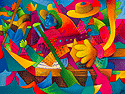 Julian
Coche Mendoza, one of five brothers who are artists, is the only
artist represented here who has gone to art school. He was obviously
talented naive artist before he went to school, but once he left
school he had trouble finding his path. After about ten years of
experimenting in different styles, he began representing his Maya
culture in a brilliantly colored style obviously influenced by
cubism. His new style immediately became popular, and was copied by
other Maya artists. Julian
Coche Mendoza, one of five brothers who are artists, is the only
artist represented here who has gone to art school. He was obviously
talented naive artist before he went to school, but once he left
school he had trouble finding his path. After about ten years of
experimenting in different styles, he began representing his Maya
culture in a brilliantly colored style obviously influenced by
cubism. His new style immediately became popular, and was copied by
other Maya artists. |
|||||||||||||
| . | |||||||||||||
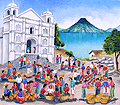 In
the 1970's Jose
Antonio Gonzalez Escobar travelled to the United States to exhibit his
paintings with the other major painters of the time, his father and first
Tz'utuhil painter, Rafael Gonzalez y Gonzalez, Juan Sisay of Santiago
Atitlán and Andres Curruchich the first Kaqchikel painter from San
Juan Comalapa. Jose Antonio's many years of painting have
firmly established his position among the Tz'utuhil painters. Jose
is one of only two Tz'utuhil painters who live in Guatemala City rather
than on Lake Atitlán. Two now internationally famous Tz'utuhil artists,
Pedro Rafael Gonzalez Chavajay and Mariano Gonzalez Chavajay, began their
oil painting careers working with their uncle Jose Antonio. In
the 1970's Jose
Antonio Gonzalez Escobar travelled to the United States to exhibit his
paintings with the other major painters of the time, his father and first
Tz'utuhil painter, Rafael Gonzalez y Gonzalez, Juan Sisay of Santiago
Atitlán and Andres Curruchich the first Kaqchikel painter from San
Juan Comalapa. Jose Antonio's many years of painting have
firmly established his position among the Tz'utuhil painters. Jose
is one of only two Tz'utuhil painters who live in Guatemala City rather
than on Lake Atitlán. Two now internationally famous Tz'utuhil artists,
Pedro Rafael Gonzalez Chavajay and Mariano Gonzalez Chavajay, began their
oil painting careers working with their uncle Jose Antonio. |
|||||||||||||
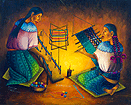 Domingo
Garcia Criado is one of the few San Pedro artists to people his
paintings almost exclusively with people wearing the traje of his
pueblo—the other artists preferring the traje of the major
tourist towns Santiago Atitlán and Chichicastenango. Domingo has stylized
the designs on the traje and in nature to such a degree that his paintings
while still naive have a definite op-art or art deco connection.
Domingo
Garcia Criado is one of the few San Pedro artists to people his
paintings almost exclusively with people wearing the traje of his
pueblo—the other artists preferring the traje of the major
tourist towns Santiago Atitlán and Chichicastenango. Domingo has stylized
the designs on the traje and in nature to such a degree that his paintings
while still naive have a definite op-art or art deco connection. |
|||||||||||||
| . | |||||||||||||
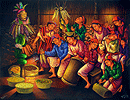 Probably
the most famous artist from San Pedro la Laguna is
Mariano Gonzalez Chavajay. Mariano along
with Pedro Rafael Gonzalez Chavajay are the two most accomplished
oil painters from San Pedro. Mariano's specialty is large paintings
of Maya life and traditions. Probably
the most famous artist from San Pedro la Laguna is
Mariano Gonzalez Chavajay. Mariano along
with Pedro Rafael Gonzalez Chavajay are the two most accomplished
oil painters from San Pedro. Mariano's specialty is large paintings
of Maya life and traditions. |
|||||||||||||
| . | |||||||||||||
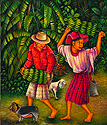 Vicenta
Puzul de Gonzalez, the first Tz'utuhil woman oil painter,
learned from her husband Mariano Gonzalez Chavajay. Vicenta has a
natural ability. She learned quickly and well. Of all of Mariano's
students she is the only one who can paint exactly like her husband.
Her works are virtually indistinguishable from those of Mariano,
except that her faces might be a little softer. For many years she
relegated her painting to helping her husband, but in the last few
years, with his support, has decided to paint on her own. Vicenta
Puzul de Gonzalez, the first Tz'utuhil woman oil painter,
learned from her husband Mariano Gonzalez Chavajay. Vicenta has a
natural ability. She learned quickly and well. Of all of Mariano's
students she is the only one who can paint exactly like her husband.
Her works are virtually indistinguishable from those of Mariano,
except that her faces might be a little softer. For many years she
relegated her painting to helping her husband, but in the last few
years, with his support, has decided to paint on her own. |
|||||||||||||
| . | |||||||||||||
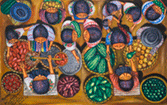 Juan
Fermin Gonzalez Morales, is the eldest of three brothers who are
painters. His work is distinctive because he usually situates his
point of view from above. His paintings accurately capture the
details of the way of life of Maya people, a way of life that is
changing as the young people leave the villages for life in the
city, and many traditions disappear. Juan
Fermin Gonzalez Morales, is the eldest of three brothers who are
painters. His work is distinctive because he usually situates his
point of view from above. His paintings accurately capture the
details of the way of life of Maya people, a way of life that is
changing as the young people leave the villages for life in the
city, and many traditions disappear. |
|||||||||||||
| . | |||||||||||||
 Emilio
Gonzalez Morales is the second of the Morales brothers. He
started out painting in the San Pedro style, but in recent years has
stopped painting accurate depictions of Maya traditions and instead
tries to capture their essence from a different point of view. Emilio
Gonzalez Morales is the second of the Morales brothers. He
started out painting in the San Pedro style, but in recent years has
stopped painting accurate depictions of Maya traditions and instead
tries to capture their essence from a different point of view. |
|||||||||||||
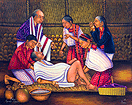 By
1990 Matias Gonzalez Chavajay was
recognized as one of the best Tz'utuhil Maya artists. His paintings
combined attention to detail with a naive charm. Then he decided to
stop doing fine paintings and focus on doing paintings quickly for
the tourist market. I stopped buying from him because the quality
went down, but I recently decided that his work still is charming,
even though quickly done. By
1990 Matias Gonzalez Chavajay was
recognized as one of the best Tz'utuhil Maya artists. His paintings
combined attention to detail with a naive charm. Then he decided to
stop doing fine paintings and focus on doing paintings quickly for
the tourist market. I stopped buying from him because the quality
went down, but I recently decided that his work still is charming,
even though quickly done. |
|||||||||||||
| . | |||||||||||||
LINKS TO SECTION PAGES
|
|||||||||||||
|
To contact us write: Arte Maya Tz'utuhil, P.O. Box 40391, San
Francisco, CA 94140. Telephone: (415) 282-7654.
Email me at
All paintings and photographs Copyright © 1988–2015 Arte Maya Tz'utuhil |





