 |
|||||||||||||
| . | |||||||||||||
 |
|||||||||||||
| . |
 |
||||||||||||
| . | |||||||||||||
| . | |||||||||||||
|
 |
||||||||||||
| . | |||||||||||||
|
LINKS TO SECTION PAGES |
|||||||||||||
| . | |||||||||||||
| The singular style of a young San Juan painter, Victor
Vasquez Temo, is as captivating as that developed by his predecessors. Born in 1968, he
remembers that he had always wanted to paint even when he was young. His family,
however, was
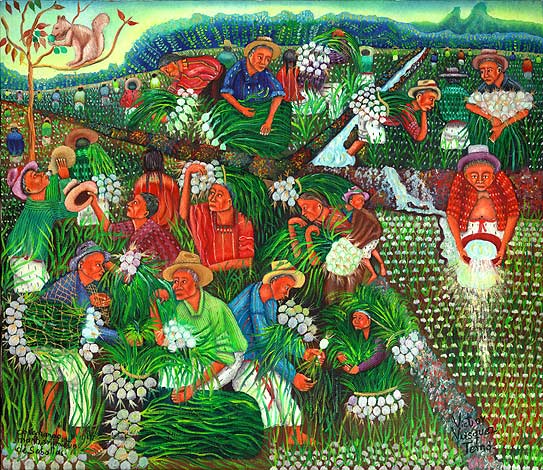
poor living in a house made of cane, and there was no money for art supplies. At age fourteen after finishing six grades in school, Victor began earning money for himself and his family. With some of this money he bought art pencils, pens, and paper and began drawing. When he was seventeen his father died, and Victor went to work full time in the fields in order to take over support of his family. He had to give up any notion of painting but continued to draw upon occasion. In 1992 an accomplished woodcarver from San Pedro, Vicente Cumes, and I visited Victor to see his drawings. The pencil sketches, although somewhat rough, were brimming with action. Victor filled the compositions with people; they occupied the entire space. Impressed by Victor's raw talent, we supplied him with some new brushes and scrounged oil paints, and showed him how to fix the canvas on a stretcher. Victor said he was not ready to paint and wanted to find a teacher, but he was persuaded to try. In a week he produced a very pleasing small painting, remarking that the most difficult part of the work was staying seated for long hours, something a field worker was not used to. |
|||||||||||||
| . | |||||||||||||
 |
|||||||||||||
| . | |||||||||||||
| Cumes convinced Victor to paint on his own, developing his
personal style unhindered by the influence of a local painter (who probably
would
inhibit the qualities that make Victor's painting exceptional). Victor has heeded Cumes'
advice with admiral results. His enthusiasm spills into his paintings
with the all-over-the-place energy of a puppy. He crams them with
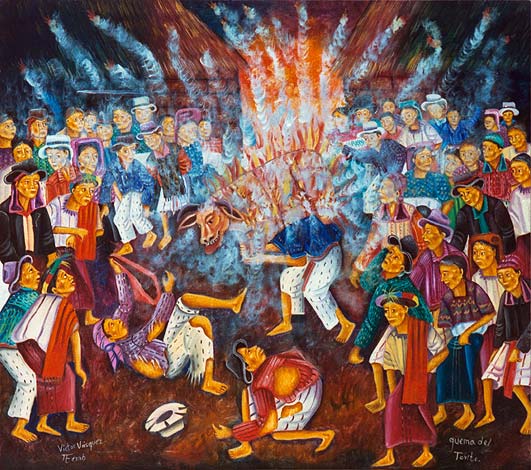
lively, active people and luxuriant plants. Even in his early pencil drawings, it's clear that Victor draws from his own observation of the way things appear. This sets him apart from the rest of the painters of San Pedro and San Juan. The younger artists have all learned from artists who are already painting. They tend to paint things the way they have seen them rendered by other artists. |
|||||||||||||
| . | |||||||||||||
 |
|||||||||||||
| . | |||||||||||||
| Part of the illusion of motion comes from the way he applies
paint to the canvas. As did Van Gogh, Victor varies his brush strokes in length, width and
direction creating different types of energy. The effect is especially evident in
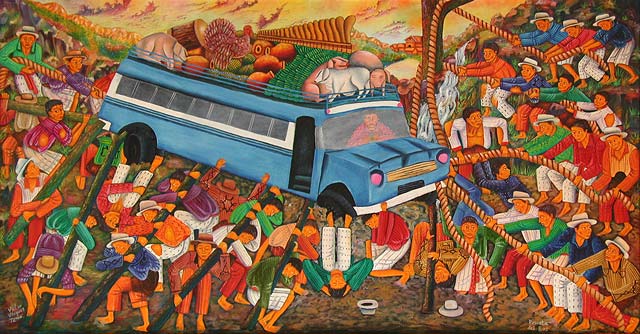
the way he paints plants. Victor's people may appear to be casually drawn, but when combined with the dynamic angles of their limbs and their acrobatic positions, this looseness of painting makes the figures seem ready to spring into action. A keen observer of people, Victor lets a natural pattern emerge from the chaos of the various angles of head, arms, legs, hands, and feet in a scene rather than an artificial order. Individually and collectively, every figure is intrinsically involved in whatever activity is taking place, whether it is picking cotton or pulling a bus out of the mud. The children in his paintings, like real children, often focus their interest on things unimportant to their parents. The incredible exuberance of Victor's art captures the essence of the Guatemalan people and their natural environment. Victor is only one of two Tz'utuhil Maya painters who allow the modern world to intrude upon the traditional—trucks and buses appear naturally in his work. His paintings manifests the strength of spirit that has carried the rich culture of the Mayan people through hundreds of years of outside influence until the present day. |
|||||||||||||
| .. | |||||||||||||
|
LINKS TO SECTION PAGES |
|||||||||||||
|
To contact us write: Arte Maya Tz'utuhil, P.O. Box 40391, San
Francisco, CA 94140. Telephone: (415) 282-7654.
Email me at
All paintings and photographs Copyright © 1988–2015 Arte Maya Tz'utuhil |
||||||||||||
| . |





