 |
|||||||||||||
| . |
 |
||||||||||||
 |
|||||||||||||
| . | |||||||||||||
|
 |
||||||||||||
| . | |||||||||||||
| . | |||||||||||||
|
LINKS TO SECTION PAGES |
|||||||||||||
| . | |||||||||||||
| CLICK ON IMAGE FOR LARGER SIZE |
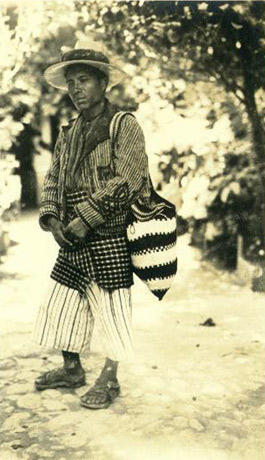  The
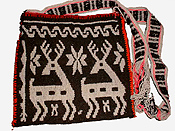
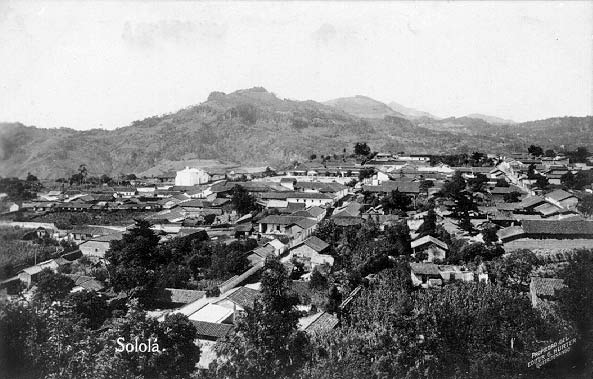
young man in the photo almost certainly comes from Sololá. His bag
is similar to the bag pictured here. The age of the photo, which
comes from an old postcard, can be gauged by the fact that hand woven
white pants are no longer worn in Sololá, the current style favors
elaborate red ones. The
young man in the photo almost certainly comes from Sololá. His bag
is similar to the bag pictured here. The age of the photo, which
comes from an old postcard, can be gauged by the fact that hand woven
white pants are no longer worn in Sololá, the current style favors
elaborate red ones. |
||||||||||||
| . | |||||||||||||
 |
|||||||||||||
| Bags | |||||||||||||
| .. |
Men made and wore shoulder bags. Some bags are knitted or crocheted, while others are produced by knotless netting or linking techniques with sprang-interlinked straps. Women do not use bags of this kind; instead, they wrap their possessions in carrying cloths or place them in pockets. The bag men use is rectangular in shape with straps attached to it. Sizes of bags vary and indicate function and town of origin. There are several Spanish words for bags: matate, bolsa, morral, and red. The latter means "net" and is used for carrying loads. |
||||||||||||
  |
|||||||||||||
| . | |||||||||||||
 |
|||||||||||||
  |
|||||||||||||
| . | |||||||||||||
| . | 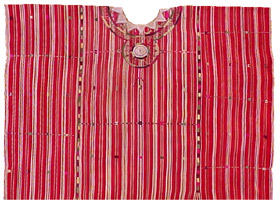 Large
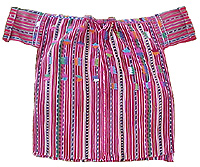
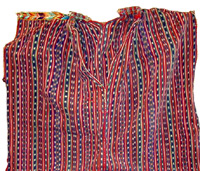
ceremonial huipiles [blouses] such as this are worn by women when
they perform duties in the Cofradías. It is worn with the same
style black cortes [skirt] used daily. Large
ceremonial huipiles [blouses] such as this are worn by women when
they perform duties in the Cofradías. It is worn with the same
style black cortes [skirt] used daily. |
||||||||||||
| . | |||||||||||||
| . |   |
||||||||||||
| . | |||||||||||||
| . | LINKS TO SECTION PAGES |
||||||||||||
| . | |||||||||||||
|
To contact us write: Arte Maya Tz'utuhil, P.O. Box 40391, San
Francisco, CA 94140. Telephone: (415) 282-7654.
Email me at
All paintings and photographs Copyright © 1988–2015 Arte Maya Tz'utuhil |





